New Castle, PA · Serving surrounding communities

24/7 Emergency HVAC Service

PA# 184619

Home / HVAC Services / Air Conditioning

AC Repair & Service in New Castle, PA

AC repair, cooling service, and replacement planning for homes in New Castle, PA.

AC not keeping your home comfortable?

Urgent heating or cooling problem? Call 412-629-3391 for 24/7 emergency service.

Cooling symptoms to describe

Tell us if your AC is blowing warm air, airflow has changed, or operation seems unusual. Mention when the problem started. A service visit begins with diagnosis and an explanation of your options.

Clear options before work begins

We diagnose the problem, explain what we found, and go over your options and the price. You approve the work before we repair or replace anything.

Service-call charges and approval

A diagnostic service call covers dispatch, diagnosis, and an explanation of your options. Repairs are separate and require approval. Emergency dispatch fees apply on weekends, holidays, and after hours; payment may be requested before dispatch.

Read the full service and emergency-charge explanation.

Maintenance helps protect cooling performance

A dirty filter, restricted airflow, or dirty coils can make heat transfer more difficult and affect efficiency. Regular checks help identify developing problems and keep the system operating as intended; they cannot guarantee trouble-free operation or restore performance lost to poor system design.

Plan an AC check before the cooling season. Between visits, maintain the correct filter, keep returns unobstructed, and keep vegetation and debris clear of the outdoor unit according to its instructions.

Our AC Clean & Check

The check includes operational verification, electrical testing, general condition, temperature difference across the system, airflow and mechanical checks, and basic non-invasive outdoor-unit cleaning. Refrigerant levels are checked when indicated by non-invasive checks. Deep cleaning requiring disassembly or chemicals, and work on inaccessible indoor coils, can involve additional charges explained before work.

The $89 offer covers one eligible operating AC system; regular price is $119. The offer is valid throughout our listed service area. Third-party home warranty customers are excluded. If the equipment is inoperable on arrival, the visit becomes a diagnostic service call; repairs and maintenance are quoted separately.

How does an air conditioner work?

Your AC moves heat out of your home. Refrigerant circulates through a closed loop between the indoor and outdoor equipment, carrying that heat outside.

  1. Inside: The blower moves household air across the cold indoor coil. Refrigerant absorbs heat from the air, and the cooled air returns through your ducts.
  2. Outside: The compressor raises the refrigerant’s pressure and temperature. The outdoor coil and fan release the collected heat outdoors.
  3. The cycle repeats: A metering device lowers refrigerant pressure before it returns to the indoor coil to absorb more heat.

Moisture also collects on the cold indoor coil and drains away—similar to water forming on a cold glass. That is how your AC helps remove humidity. Refrigerant is not normally used up; a low charge needs evaluation rather than routine topping off.

Comfort means removing humidity as well as heat

A room can reach the thermostat setting and still feel clammy. Your AC needs suitable coil conditions, airflow, and enough operating time to remove moisture.

An oversized system can cool the space too quickly and shut off before removing enough humidity. Properly selected two-stage or variable-capacity equipment can run longer at reduced output to support more consistent comfort. A high SEER2 rating alone does not guarantee better humidity control.

What if my home feels cool but damp?

Have sizing, airflow, controls, coil condition, drainage, and sources of moisture checked. During mild, humid weather, the home may not need enough cooling for the AC to control humidity on its own. A dedicated dehumidifier may be appropriate. Turning the thermostat down is not always the best solution.

What we consider during an AC service visit

The next step depends on your equipment and the problem. We can inspect the system, explain findings, and discuss repair options. If replacement is worth considering, we will explain that option too.

Planning a new air conditioner

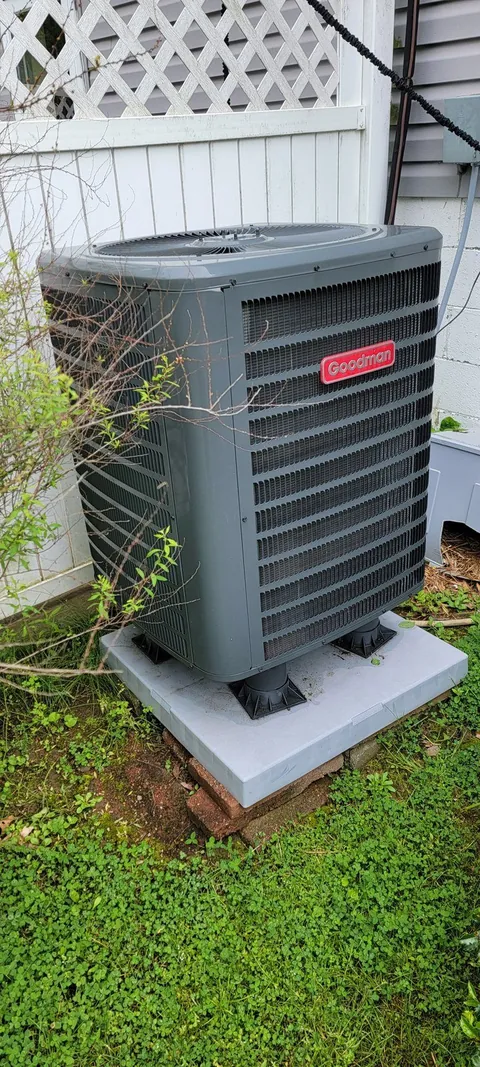
Ask about Goodman, Heil, Concord, and Bosch equipment. Choosing a system involves your home’s cooling needs and compatibility with the rest of your HVAC system.

Understanding 13.5–20 SEER2 efficiency ratings

SEER2 stands for Seasonal Energy Efficiency Ratio 2. It compares seasonal cooling output with electrical energy use under standardized testing. Higher numbers indicate greater rated seasonal efficiency, not a larger cooling capacity.

13.5 SEER2: our most popular choice

The option our customers choose most often, with the lowest upfront equipment cost among the options compared here. It is a practical choice when keeping the initial purchase price down is the priority.

16 SEER2

A middle point in this range. Comfort features and compressor stages depend on the model; the efficiency number alone does not identify them.

20 SEER2

A higher rating within this range. Some systems achieve it with advanced capacity controls, but the actual rating depends on the equipment combination and size.

Upfront equipment cost generally increases with higher SEER2 ratings. The final installed price also depends on system size, the matched indoor equipment, and any electrical or ductwork changes needed. We explain the price and options for your home before you decide.

These are comparison points, not a promise that every brand, size, or installation is available at each rating. The proposed system must meet applicable requirements, and its exact certified rating should be confirmed. Older SEER and newer SEER2 numbers use different testing procedures and should not be treated as identical.

How much electricity could a higher rating save?

For the same seasonal cooling output under the rating assumptions, 20 SEER2 versus 13.5 SEER2 represents about 32.5% less cooling electricity: 1 − (13.5 ÷ 20). This is a simplified rating comparison, not a forecast of your utility bill. Weather, indoor settings, duct leakage, sizing, installation, and maintenance affect actual use.

Estimate your cooling electricity costs

Example only—not a quote, measured energy use, or prediction of your electric bill. Compare two SEER2-rated systems using the same assumed cooling demand. Changing the inputs changes the estimate.

Illustrative cooling demand: The starting value of 400 equivalent full-load cooling hours is an editable example, not a measured current average for Pittsburgh, New Castle, or western Pennsylvania. Use a home-specific estimate when available. Weather, thermostat settings, insulation, and system sizing affect actual cooling demand.

Equivalent full-load hours express seasonal cooling demand as hours at full capacity. They are not actual compressor or thermostat runtime. A system operating at reduced capacity can run many more hours. We have not established a reliable current region-wide average runtime; use a home-specific estimate when available.

Cooling only: This does not calculate furnace heating, electric backup heat, water heating, appliances, a separate dehumidifier, or other household equipment. Cooling-season indoor fan energy is represented only to the extent included in the matched system’s SEER2 rating; extra fan-only circulation is not separately calculated.

How this estimate works and what it leaves out

Estimated annual cooling electricity (kWh) = capacity in tons × 12,000 × equivalent full-load cooling hours ÷ (SEER2 × 1,000). Annual cost = estimated kWh × electricity price in dollars per kWh. Both systems are assumed to deliver the same seasonal cooling output.

Compare SEER2 with SEER2. Do not enter an older SEER rating as though it were SEER2. Use the certified rating for the matched system. This simplified comparison does not model local weather, changing loads, duct losses, installation defects, or equipment deterioration. It excludes heating, other household electricity, fixed utility charges, and purchase or repair costs. Results do not predict payback or measure actual energy use.

The starting values are examples you can change. Higher efficiency may reduce cooling electricity but does not necessarily offset the higher purchase price in your home.

HUD historical residential cooling-hours reference (1985) · DOE: cooling energy and cost comparison methods · Goodman Energy Calculator ↗

AHRI matching: the whole system matters

The outdoor AC unit, indoor evaporator coil, and furnace or air handler where specified must be an appropriate combination. Matching brand names alone does not establish the system’s efficiency.

AHRI—the Air-Conditioning, Heating, and Refrigeration Institute—certifies equipment performance ratings. An AHRI certificate identifies the specific rated combination and its performance. An advertised “up to” SEER2 rating does not mean every indoor/outdoor combination achieves that number.

Ask for the applicable AHRI reference number or certificate for a proposed system. Certification verifies equipment ratings; it does not certify the installation or guarantee savings. Correct sizing, airflow, refrigerant charge, and ductwork still matter.

Cased and uncased indoor coils: plan for future maintenance

The indoor evaporator coil absorbs heat and removes moisture from your home’s air. Both cased and uncased coils can work properly when selected, matched, and installed correctly. The main difference is how the coil is enclosed and accessed.

Cased coil

A cased coil comes in a factory cabinet, typically with insulation and removable service panels. With suitable clearance, these panels can make inspection and access for cleaning easier, without opening up a field-built sheet-metal enclosure.

Uncased coil

An uncased coil is installed inside a field-built or existing duct enclosure. It can suit certain space and retrofit requirements, but maintenance access depends on how that enclosure is built. Without a suitable access panel, reaching the coil may require additional sheet-metal work.

Why service access matters

A well-positioned cased coil can simplify future inspections and maintenance and may reduce access labor. However, a cabinet alone does not guarantee easy access to every coil surface or the drain pan. Coil design, installation orientation, nearby piping, and available working space all matter.

Either option must have the correct equipment match, airflow, drainage, insulation, sealing, and manufacturer-required service clearance. Cased does not automatically mean higher SEER2 or better cooling.

Does a cased coil make indoor coil cleaning part of the $89 special?

No. Easier access can help with servicing, but indoor coil cleaning is not automatically included in the basic Clean & Check. Cleaning that requires extra access work, disassembly, or chemicals is quoted separately and requires approval.

Residential equipment we service

We service most residential heating and cooling equipment, including systems powered by natural gas, propane, and electricity. The brands we service are not limited to the brands we offer for new installations. Call with your equipment brand and model to confirm service availability.

We do not service oil-fired equipment or steam heating systems. We do not install customer-provided parts or equipment.

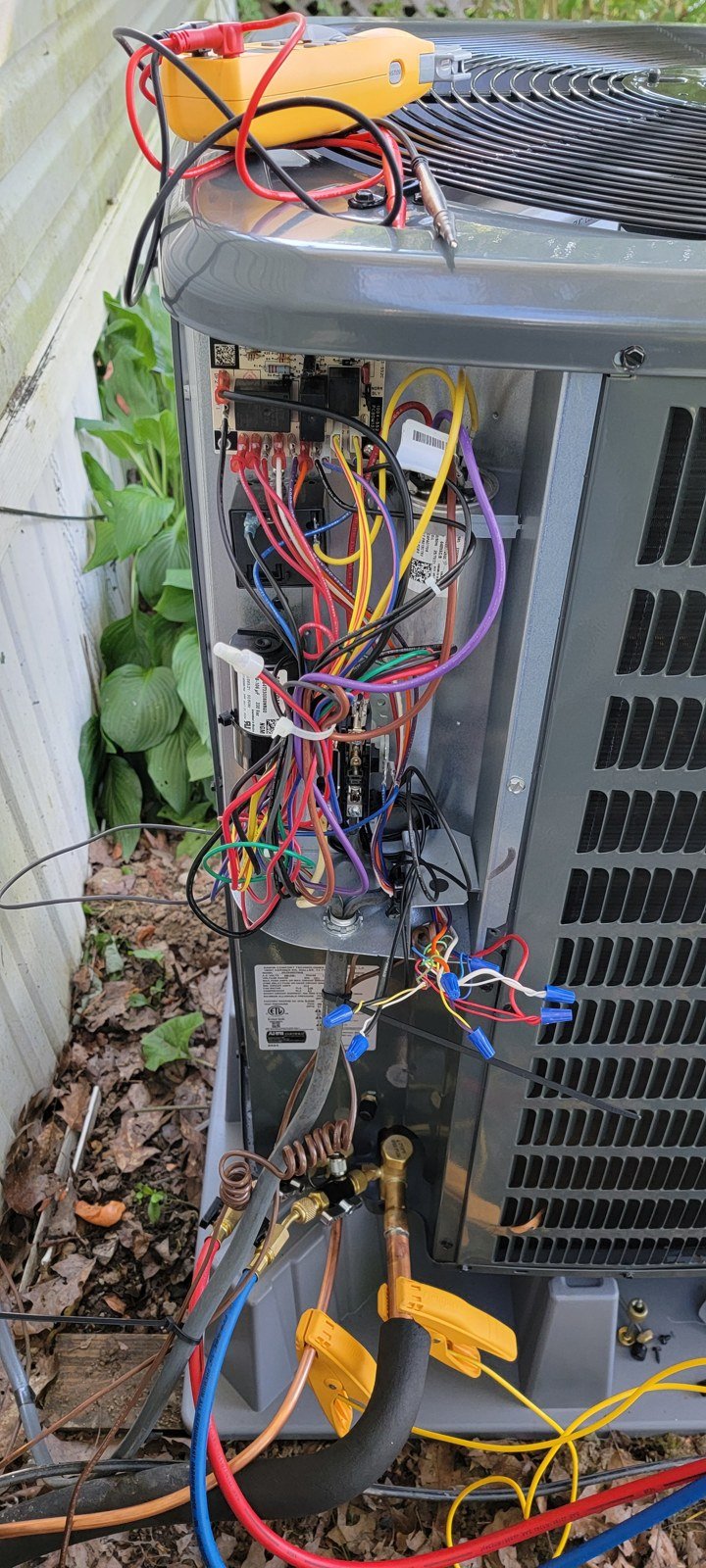
A look at our work

Work performed by founder Jacob Ward.
Questions about this service

Can I request service without knowing the problem?

Yes. Describe what you notice; you do not need to diagnose the equipment.

Will you explain repair options before replacing my AC?

We explain findings, available options, and the proposed price before you authorize work.

Request AC service

Call 412-629-3391 to talk about your home. For urgent heating or cooling help, call directly for 24/7 emergency service.

TEXT 412-629-3391 for routine service or installation questions. For emergency service, call directly.

Related options

All HVAC services · System replacements · Maintenance

Residential service from a New Castle business. View our service areas.

Related information for your home

For a home that feels cool but damp, explore humidity-control options. If you are comparing systems that heat as well as cool, read about heat pump operation and backup heat.